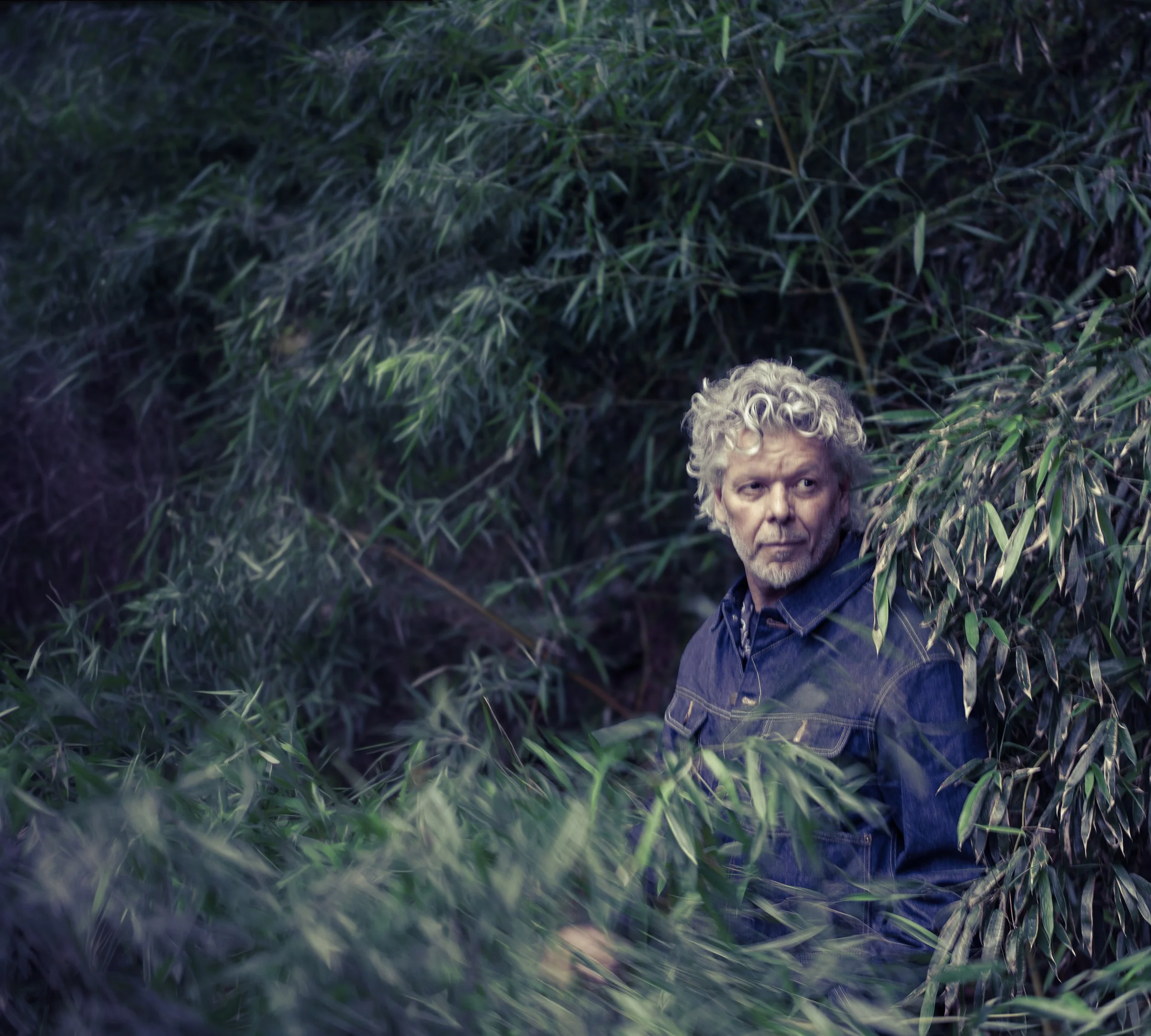
Hans Neleman
Interview by Andrew Fish
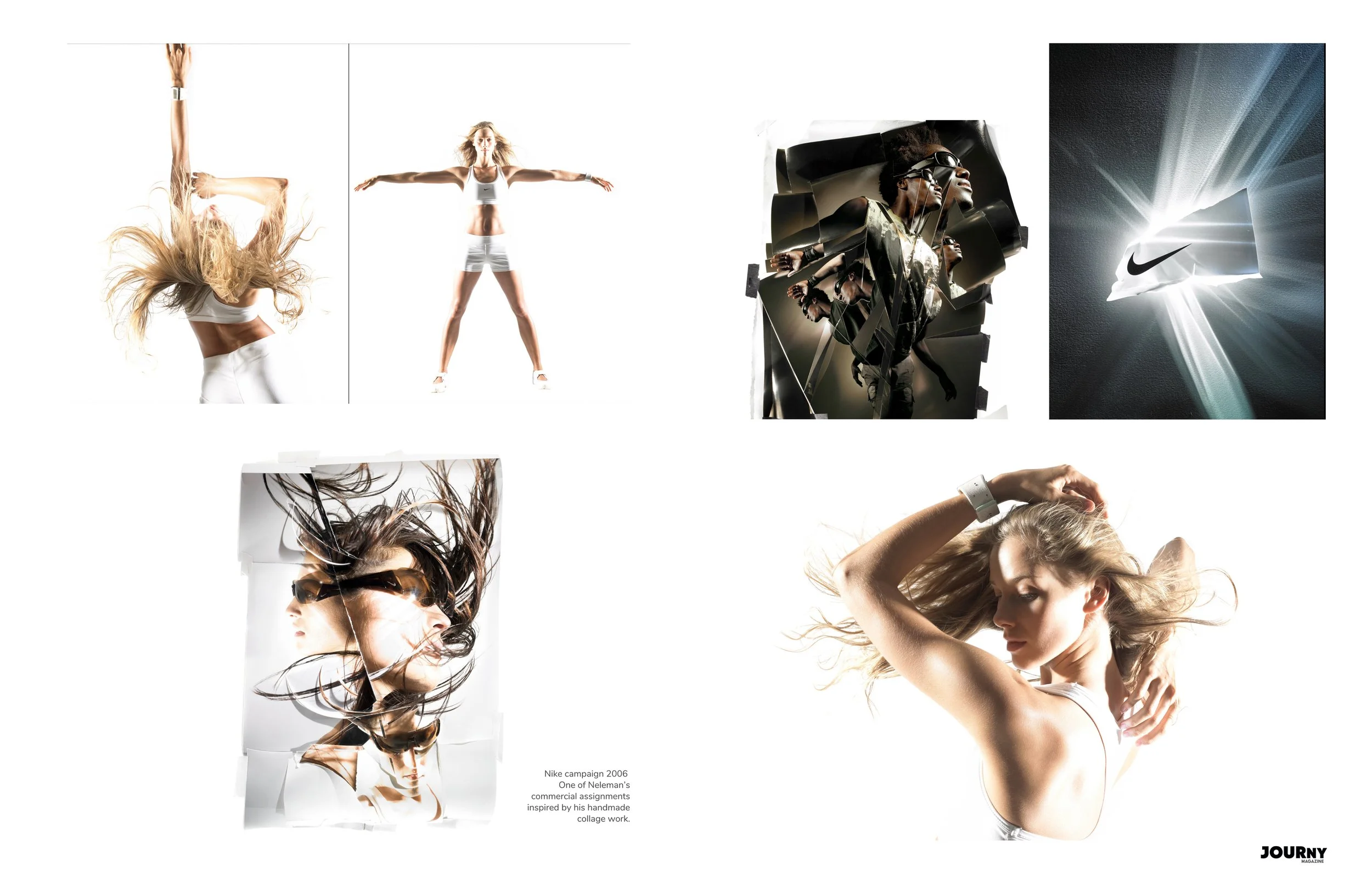
Hans Neleman’s work straddles a boundary between painting and photography, using collage and assemblage as his primary visual language. It’s a rare yet powerful combination of material and aesthetics. His work wasn’t always like that; he spent several years in commercial photography honing his skills as an award-winning photographer and shooting commercials and videos for MTV. He also made art that incorporated multiple mediums alongside his photography so it was inevitable that they would come together. Hans has an extensive history of art exhibitions, commissions, and accolades. In the early 2000’s he published three books of photography that are collectors items today.
I spoke with Hans recently and we got caught up on life and art. I had several questions for him and he had a lot to share. Here are some excerpts:
We tend to think of memories as records of the past, yet they are constantly being edited, reconstructed, and reinterpreted over time. Every recollection is layered with subsequent experiences.
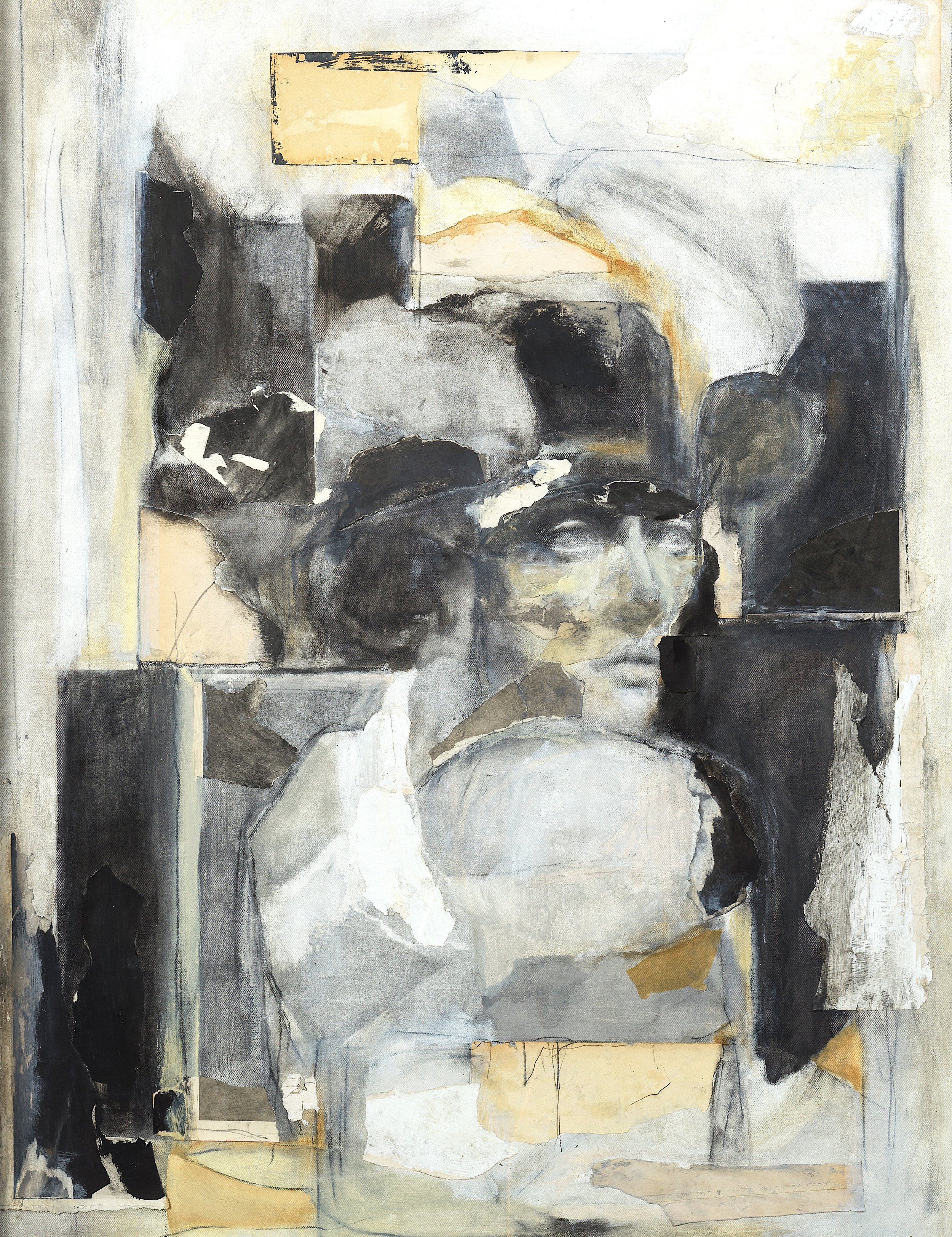
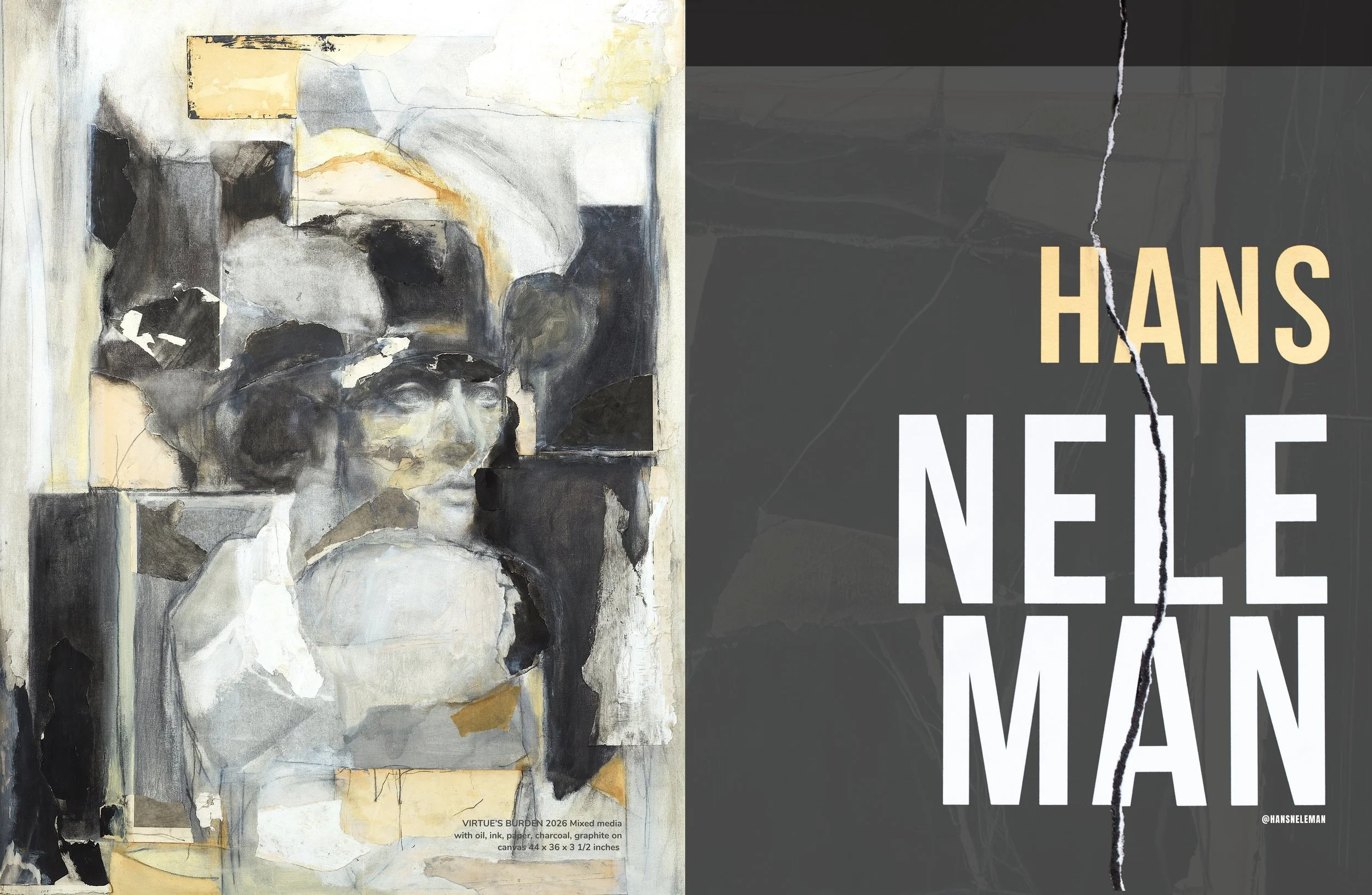
VIRTUE’S BURDEN | 2026 | Mixed media with oil, ink, paper, charcoal, graphite on canvas, 44 × 36 × 3.5 inches
How do you see the relationship between photography, painting, collage, and sculpture in your work?
Photography, painting, collage, and sculpture have never felt like separate disciplines to me. They are simply mediums to explore ideas. I believe that in much of my work they can all co-exist.
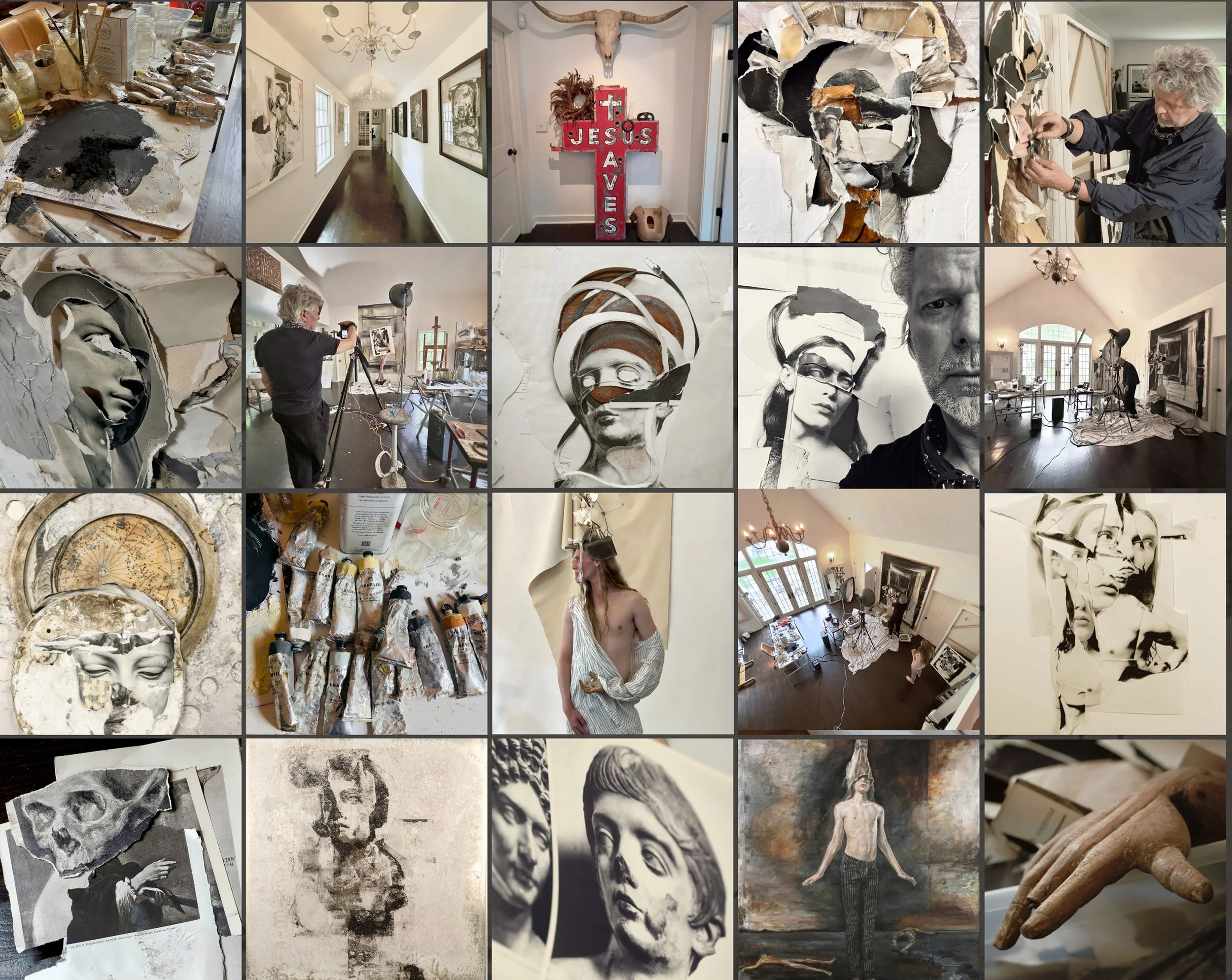
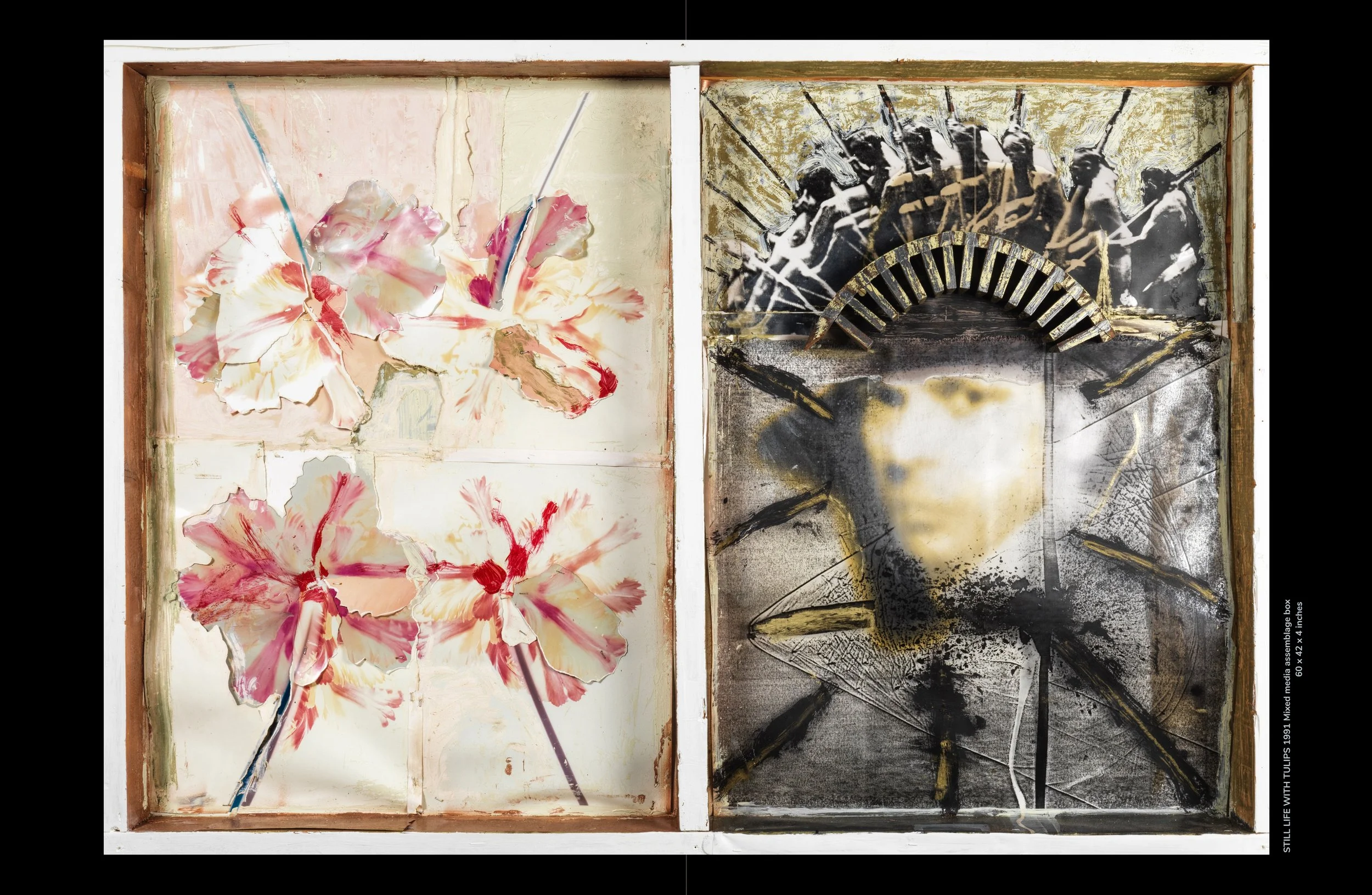
When my still-life photography became popular and sought after, some clients wanted to keep the sets intact after the shoot. That led me to build large, wall-mounted boxes—often four by five feet in size—that held the entire arrangement as an artwork in its own right. What began as photography naturally expanded into three-dimensional assemblage.
I loved having one foot in the art world and the other in commerce. The two were never in conflict for me.
What inspires your work? Are there any other art forms that influence your creativity or spark ideas for projects?
Myth and allegory provide a rich framework for exploring timeless human themes. Questions of transformation, desire, mortality, power, and ambiguity remain just as relevant today as they were in ancient cultures. I am also intrigued by the fact that certain ideas remain surprisingly provocative.
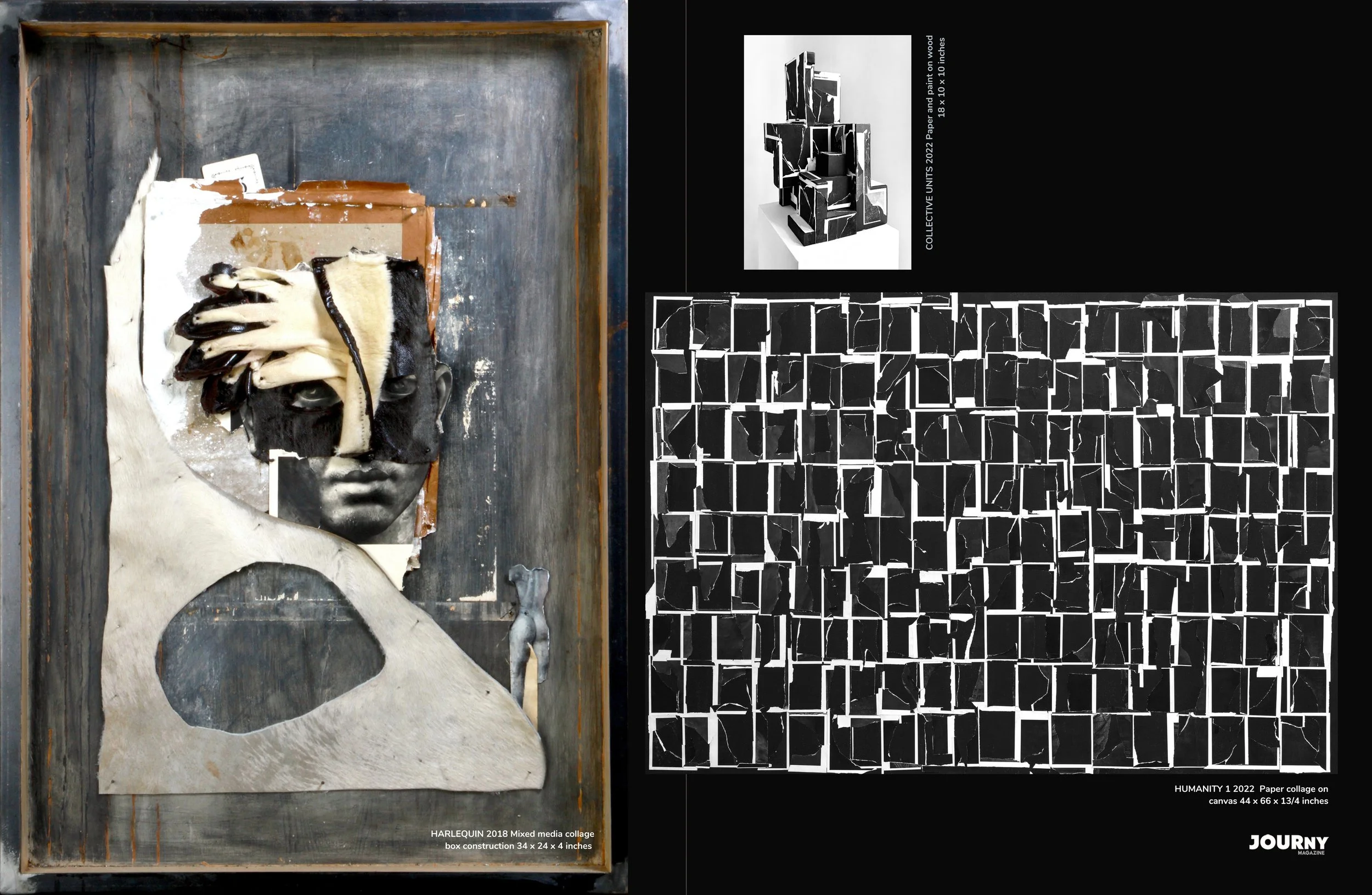
Classical art is filled with nudity, fluid identities, and figures that exist between categories—human and animal, male and female, mortal and divine.
Most of the work you make is either black and white or monochromatic. How did this come about and what is the significance of using a monochromatic palette?
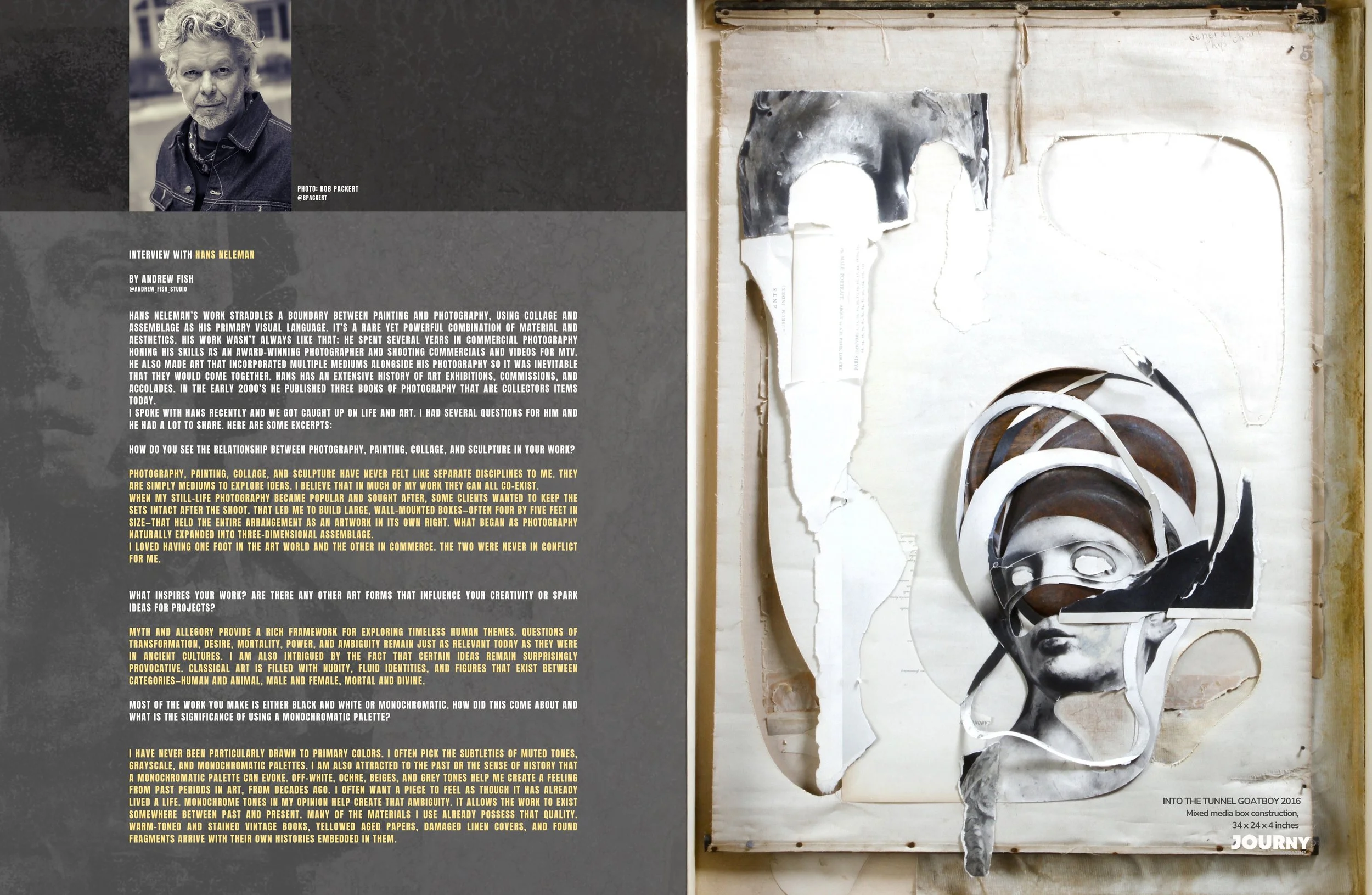
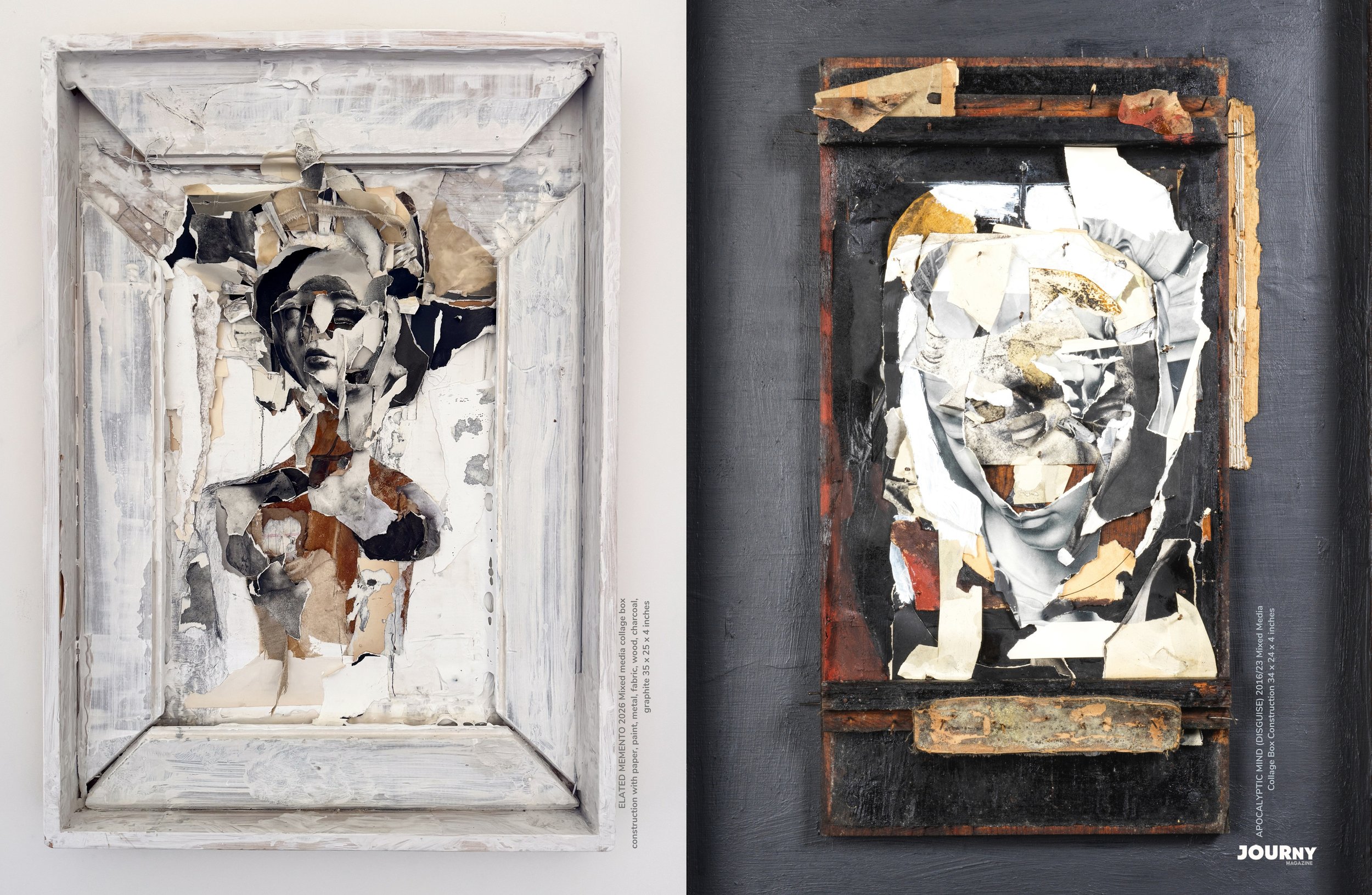
I have never been particularly drawn to primary colors. I often pick the subtleties of muted tones, grayscale, and monochromatic palettes. I am also attracted to the past or the sense of history that a monochromatic palette can evoke. Off-white, ochre, beiges, and grey tones help me create a feeling from past periods in art, from decades ago. I often want a piece to feel as though it has already lived a life. Monochrome tones in my opinion help create that ambiguity. It allows the work to exist somewhere between past and present.
Many of the materials I use already possess that quality. Warm-toned and stained vintage books, yellowed aged papers, damaged linen covers, and found fragments arrive with their own histories embedded in them.
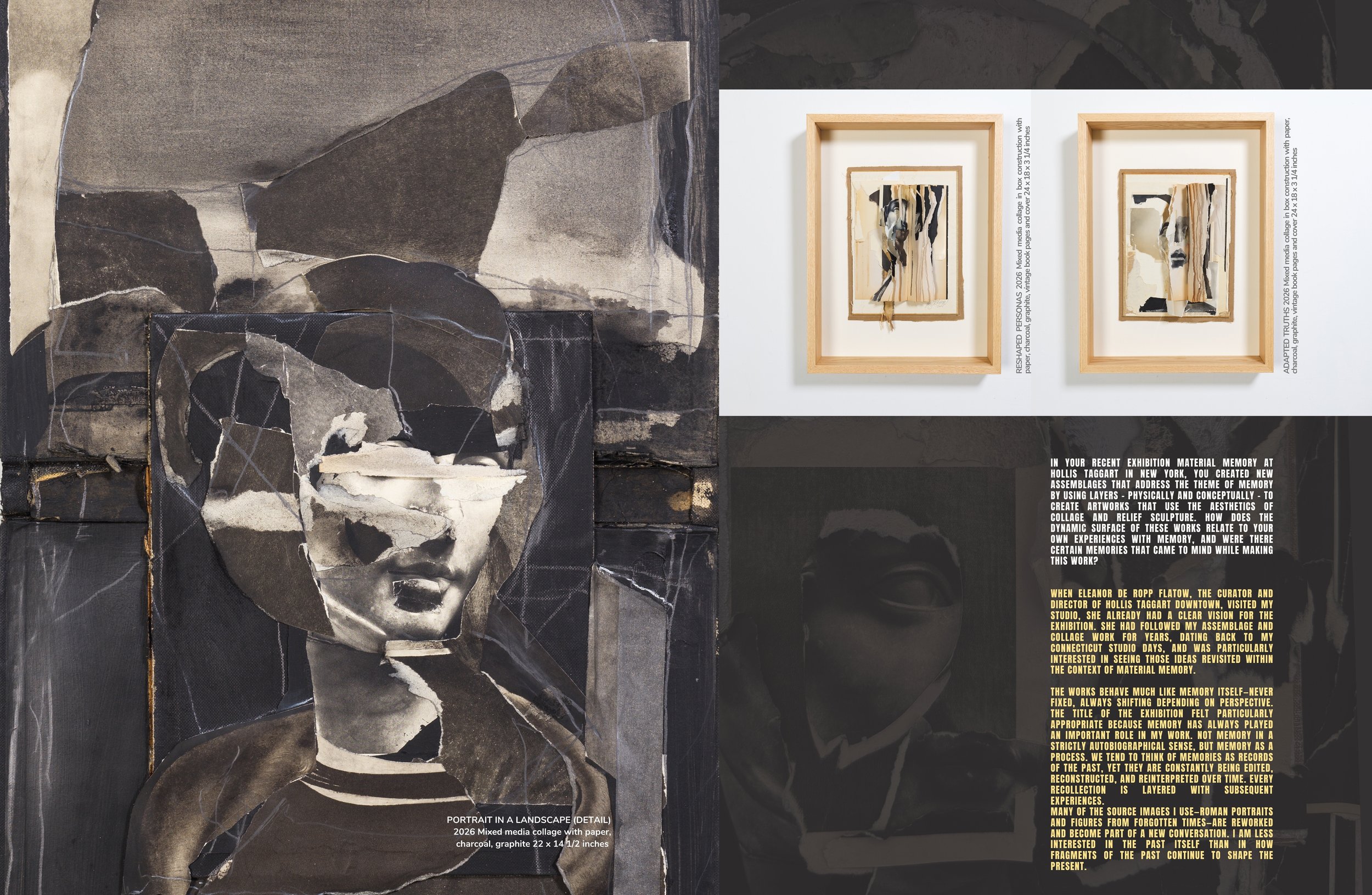
In your recent exhibition Material Memory at Hollis Taggart in New York, you created new assemblages that address the theme of memory by using layers - physically and conceptually - to create artworks that use the aesthetics of collage and relief sculpture. How does the dynamic surface of these works relate to your own experiences with memory, and were there certain memories that came to mind while making this work?
When Eleanor de Ropp Flatow, the curator and director of Hollis Taggart Downtown, visited my studio, she already had a clear vision for the exhibition. She had followed my assemblage and collage work for years, dating back to my Connecticut studio days, and was particularly interested in seeing those ideas revisited within the context of Material Memory.
The works behave much like memory itself—never fixed, always shifting depending on perspective. The title of the exhibition felt particularly appropriate because memory has always played an important role in my work. Not memory in a strictly autobiographical sense, but memory as a process. We tend to think of memories as records of the past, yet they are constantly being edited, reconstructed, and reinterpreted over time. Every recollection is layered with subsequent experiences.
Many of the source images I use—Roman portraits and figures from forgotten times—are reworked and become part of a new conversation. I am less interested in the past itself than in how fragments of the past continue to shape the present.
What’s next for you?
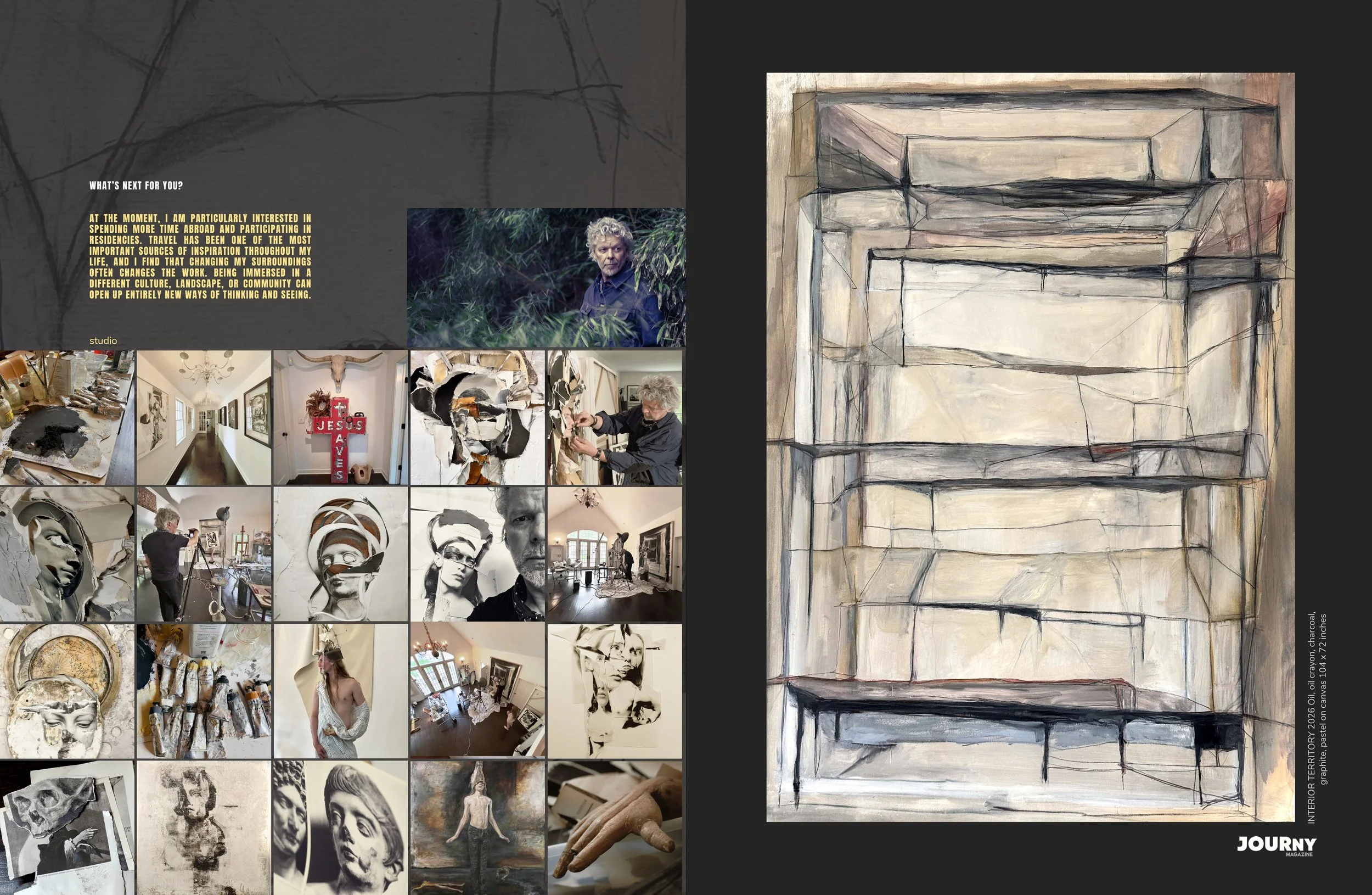
At the moment, I am particularly interested in spending more time abroad and participating in residencies. Travel has been one of the most important sources of inspiration throughout my life, and I find that changing my surroundings often changes the work. Being immersed in a different culture, landscape, or community can open up entirely new ways of thinking and seeing.
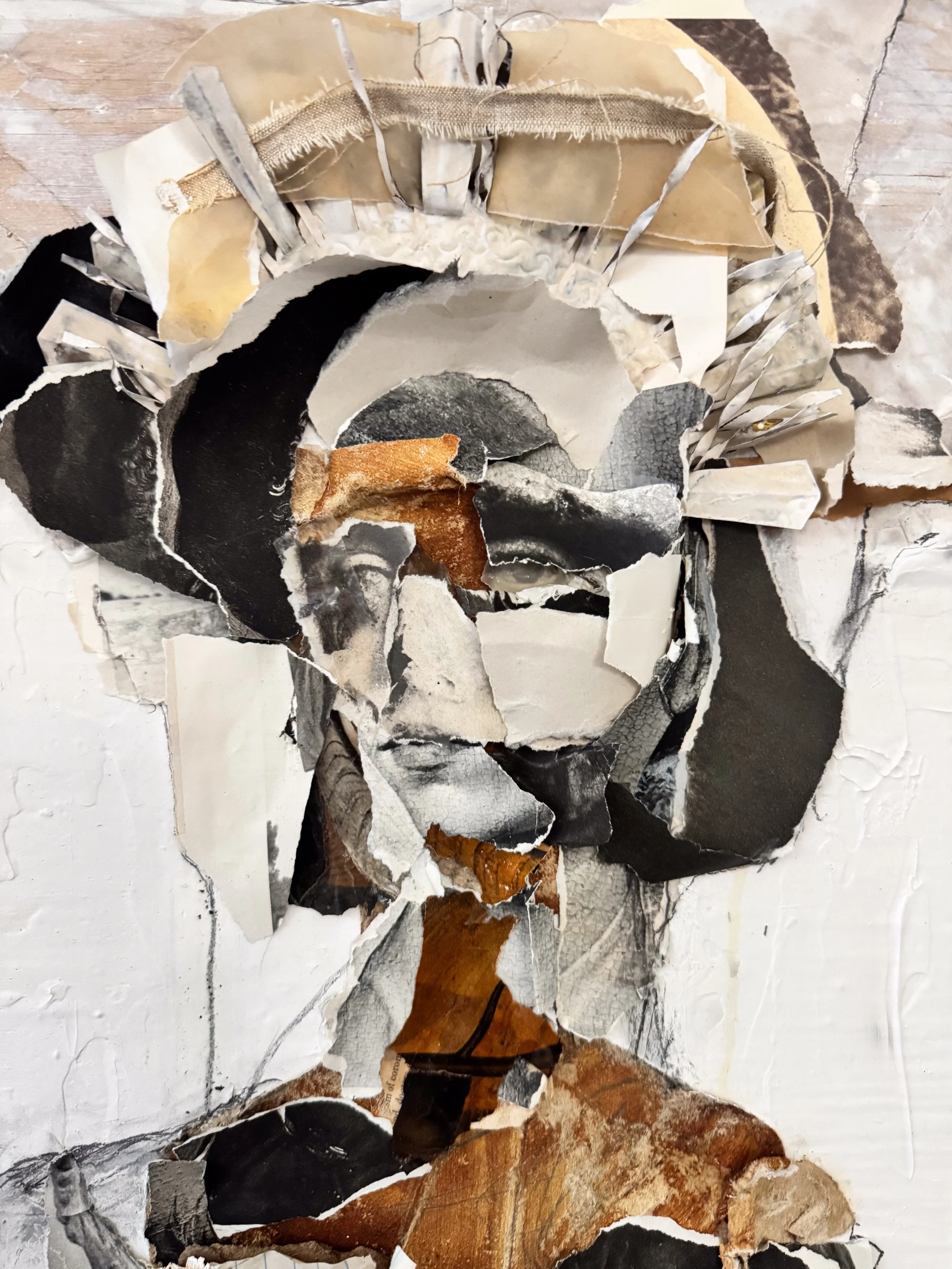
ELATED MEMENTO (EARLY VERSION DETAIL) | 2026 | Mixed media collage box construction with paper, paint, metal, fabric, wood, charcoal, graphite, 35 x 25 x 4 inches
I loved having one foot in the art world and the other in commerce. The two were never in conflict for me.
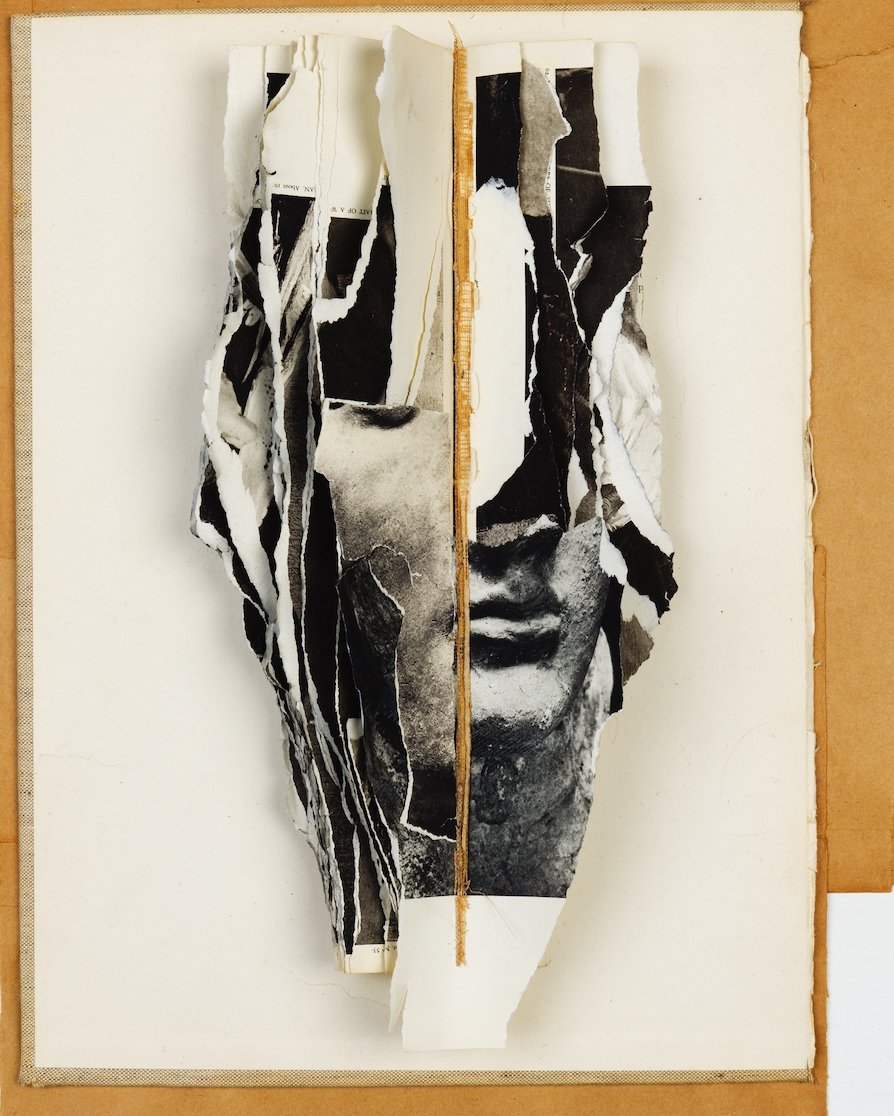
RECOMPOSED MEMORIES | 2025 | Mixed media collage in box construction, 17 x 13 x 3 inches
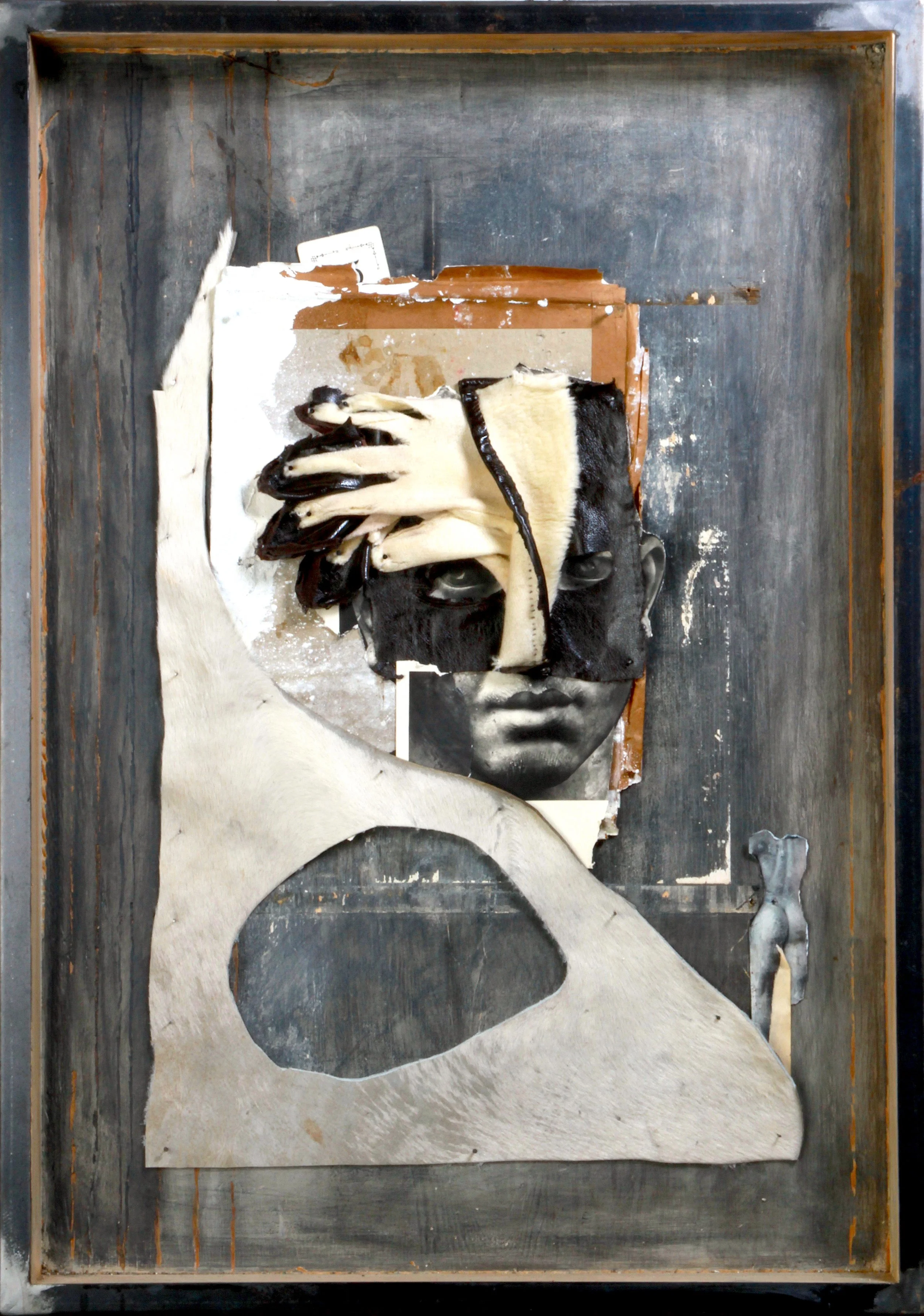
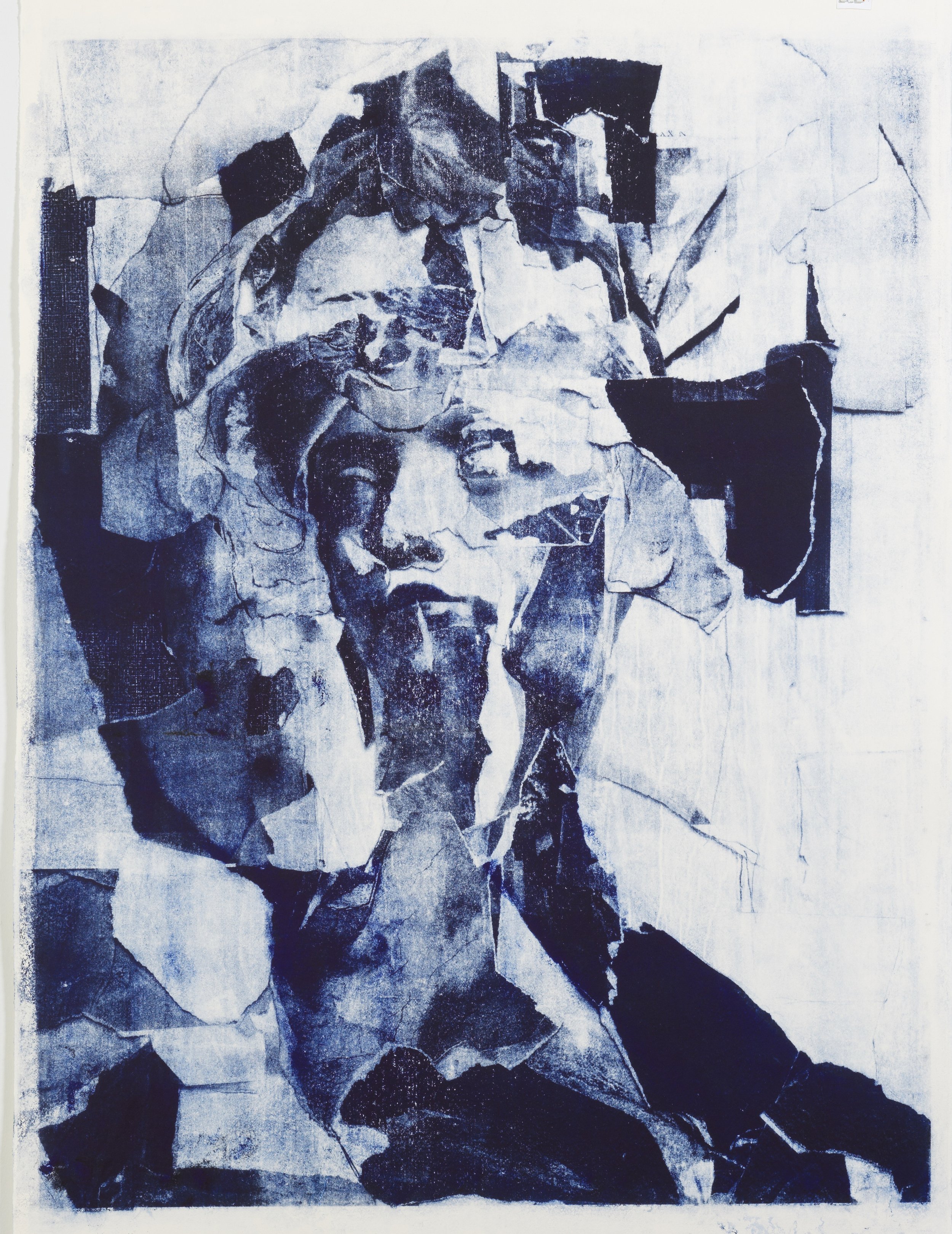
PORTRAIT OF A MARBLE DREAM IV | 2026 | Lithograph monoprint; hand-inked and hand-printed on Hahnemühle Copperplate paper, 47.5 x 31.5 inches
HARLEQUIN | 2018 | Mixed media collage box construction, 34 × 24 × 4 inches