In conversation with Artist
Ibrahim Ali-Salaam
Interview by JOURny Magazine
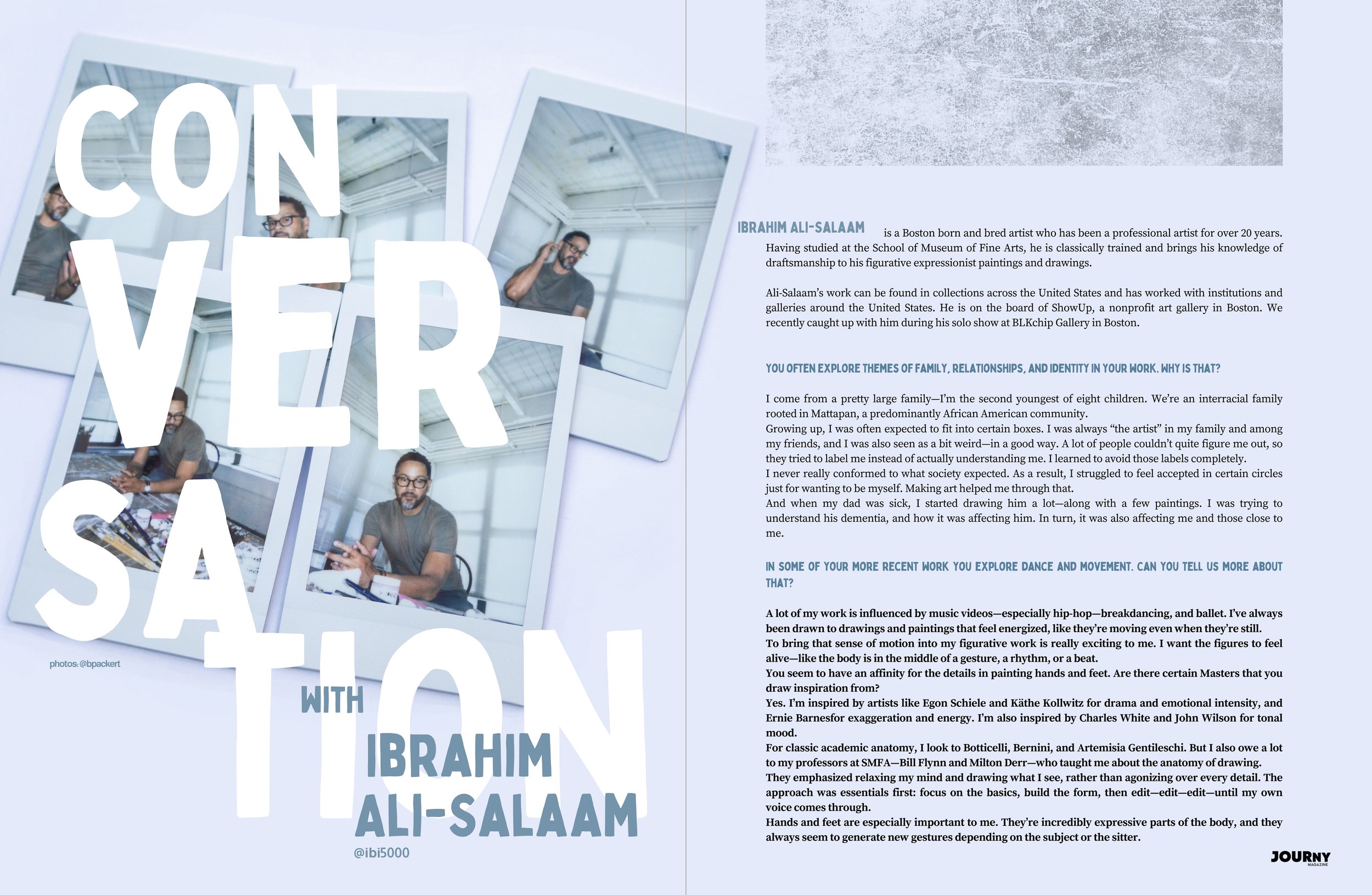
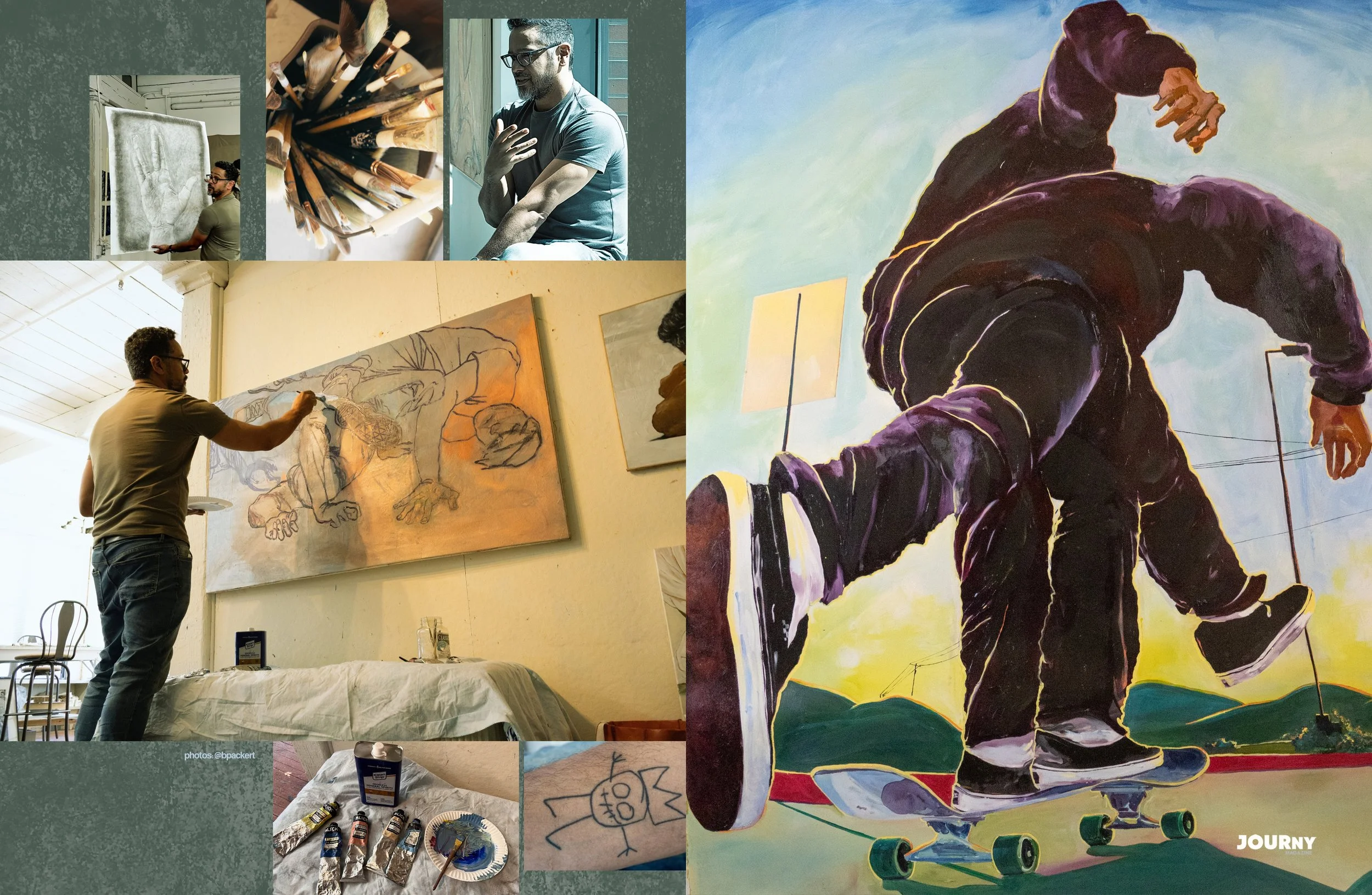
Ibrahim Ali-Salaam is a Boston born and bred artist who has been a professional artist for over 20 years. Having studied at the School of Museum of Fine Arts, he is classically trained and brings his knowledge of draftsmanship to his figurative expressionist paintings and drawings.
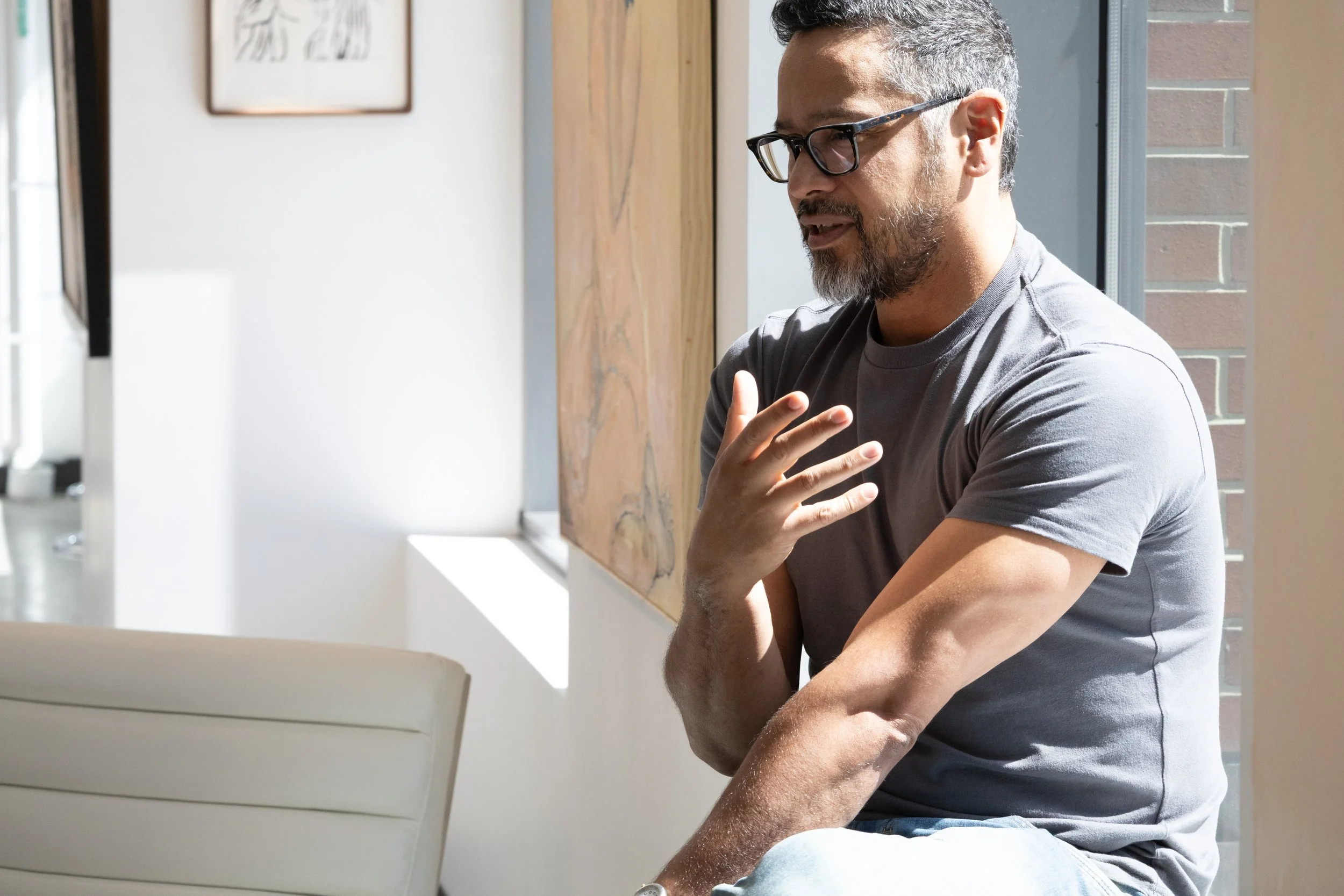
Ali-Salaam’s work can be found in collections across the United States and has worked with institutions and galleries around the United States. He is on the board of ShowUp, a nonprofit art gallery in Boston. We recently caught up with him during his solo show at BLKchip Gallery in Boston.
You often explore themes of family, relationships, and identity in your work. Why is that?
I come from a pretty large family—I’m the second youngest of eight children. We’re an interracial family rooted in Mattapan, a predominantly African American community.
Growing up, I was often expected to fit into certain boxes. I was always “the artist” in my family and among my friends, and I was also seen as a bit weird—in a good way. A lot of people couldn’t quite figure me out, so they tried to label me instead of actually understanding me. I learned to avoid those labels completely.
I never really conformed to what society expected. As a result, I struggled to feel accepted in certain circles just for wanting to be myself. Making art helped me through that.
And when my dad was sick, I started drawing him a lot—along with a few paintings. I was trying to understand his dementia, and how it was affecting him. In turn, it was also affecting me and those close to me.
In some of your more recent work you explore dance and movement. Can you tell us about that?
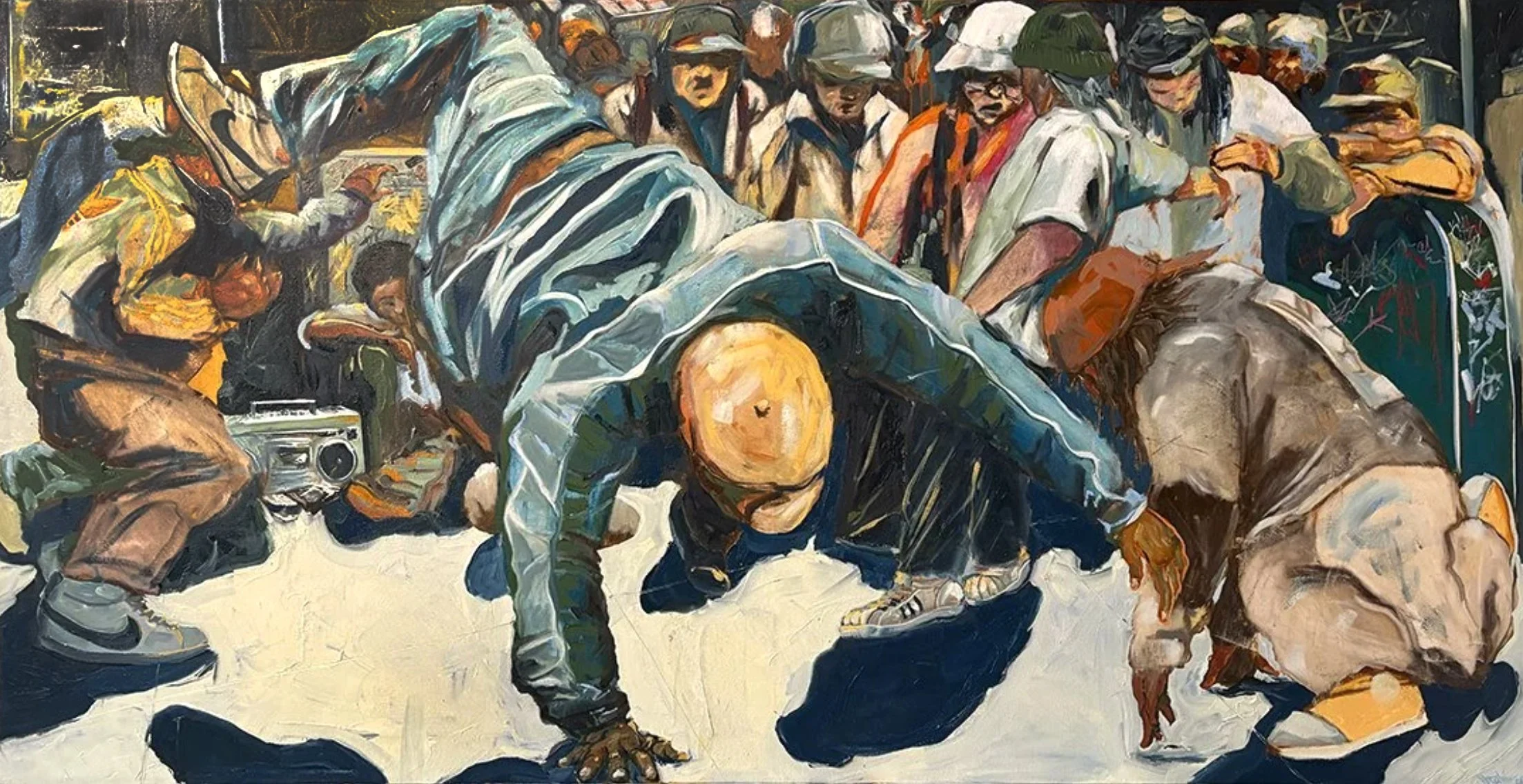
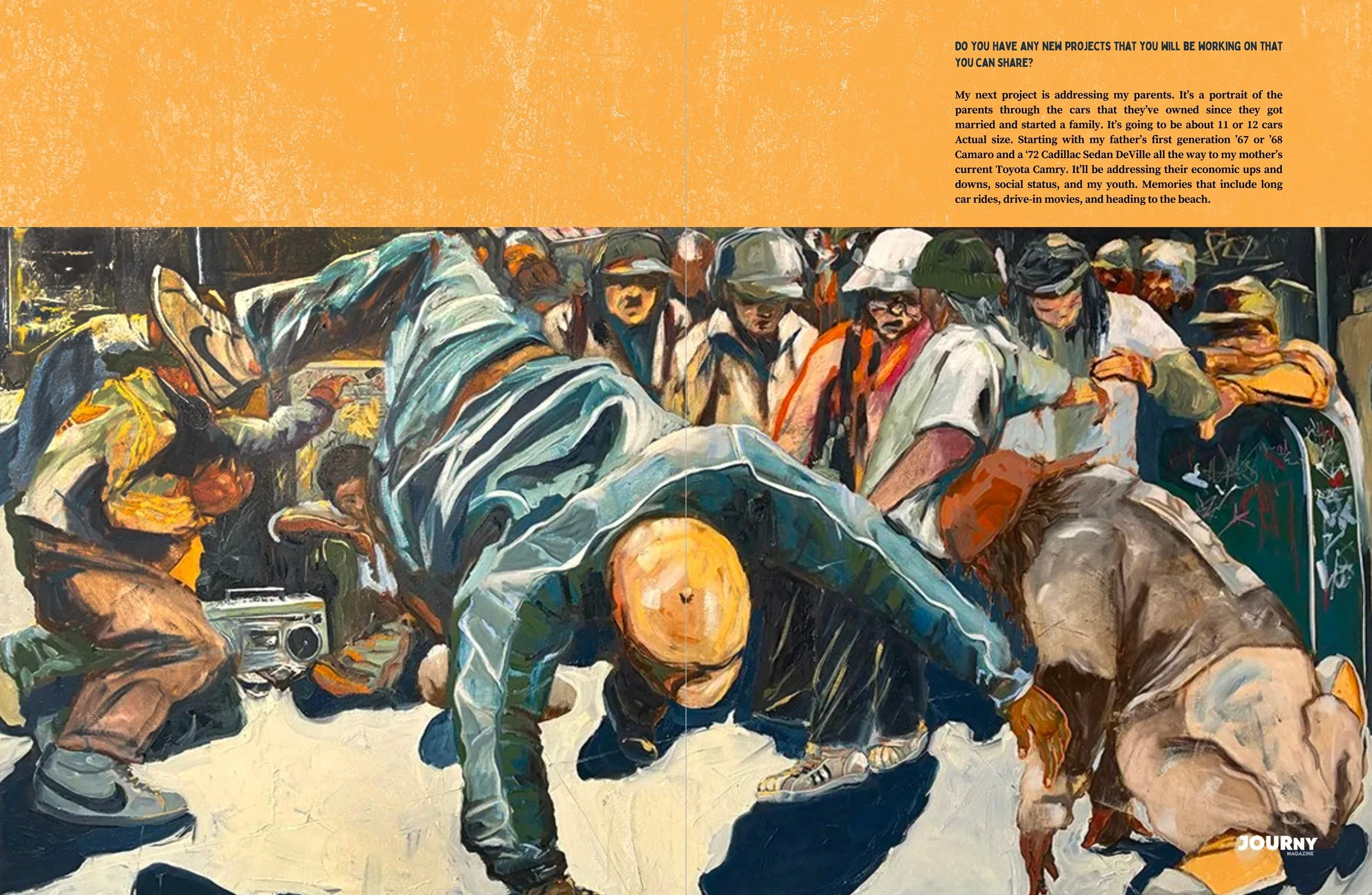
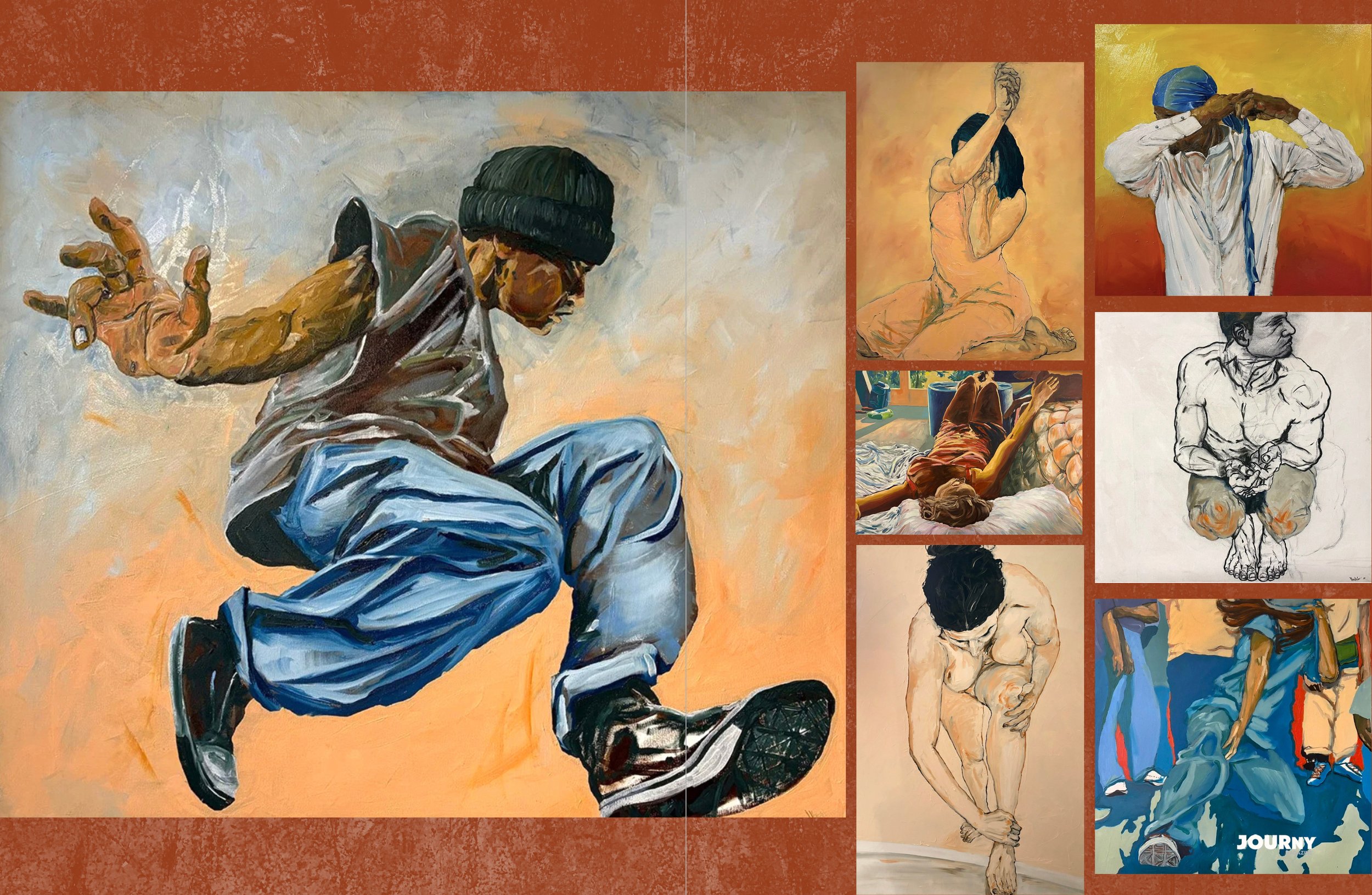
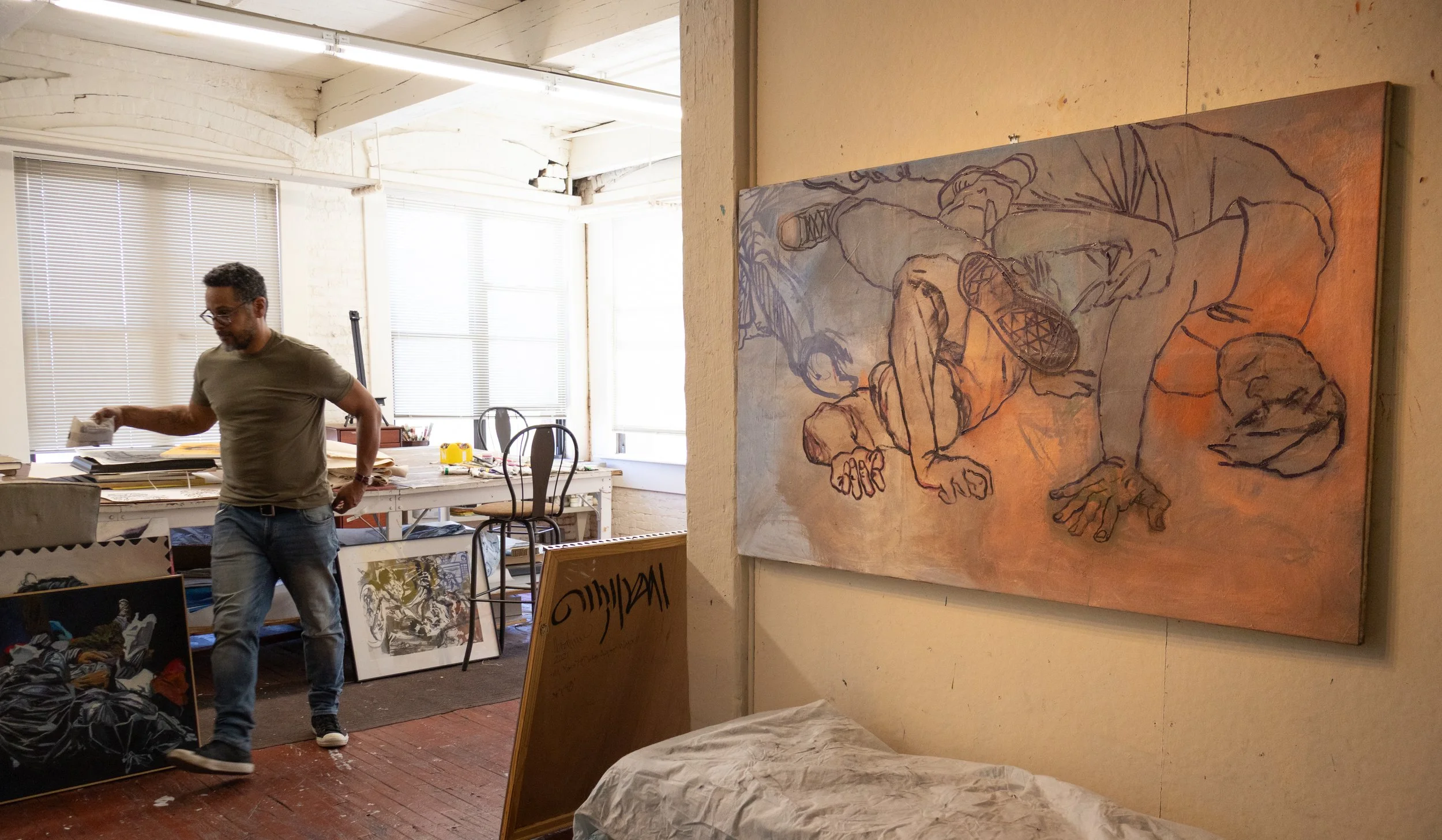
A lot of my work is influenced by music videos—especially hip-hop—breakdancing, and ballet. I’ve always been drawn to drawings and paintings that feel energized, like they’re moving even when they’re still.
To bring that sense of motion into my figurative work is really exciting to me. I want the figures to feel alive—like the body is in the middle of a gesture, a rhythm, or a beat.
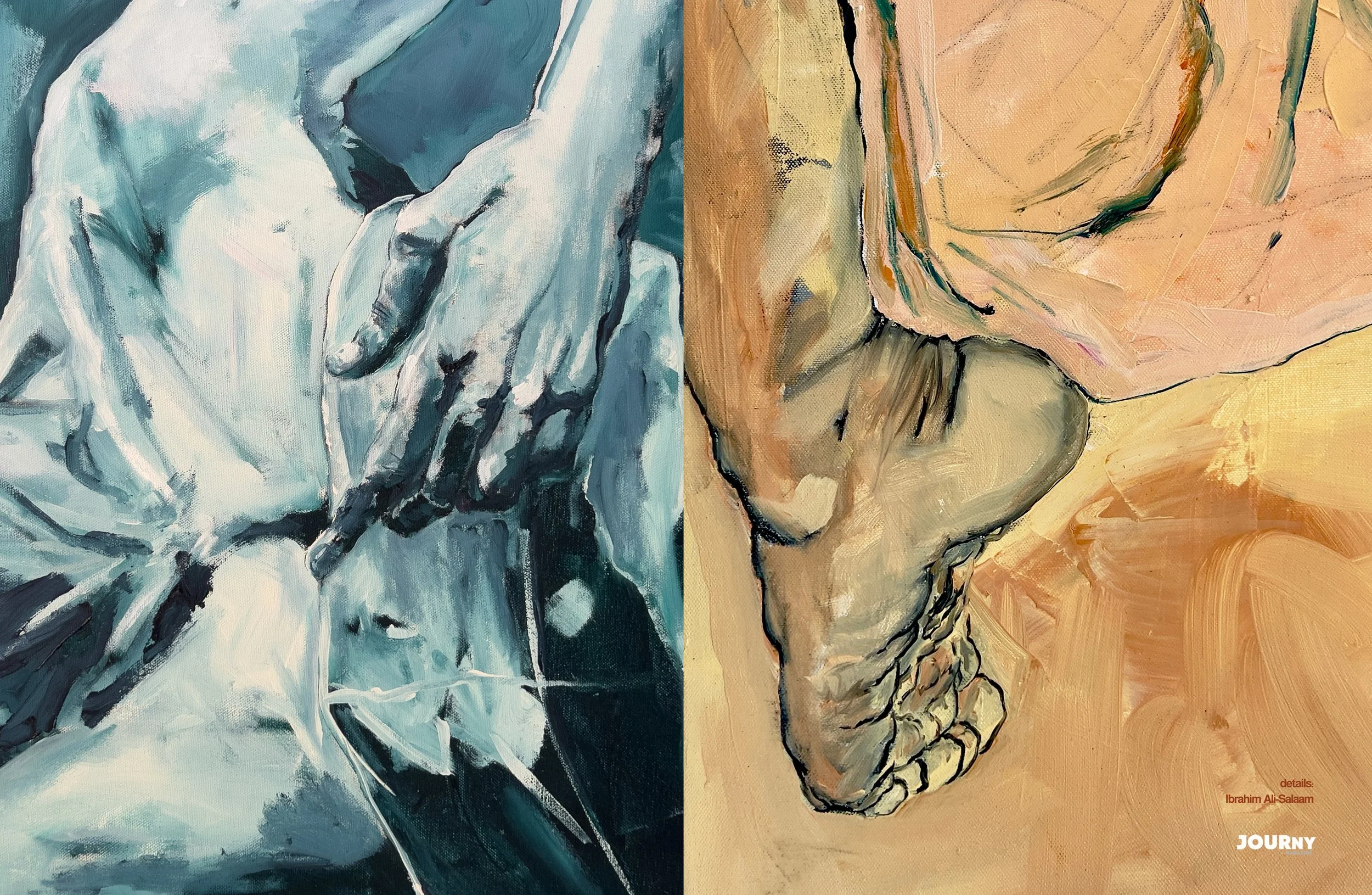
You seem to have an affinity for the details in painting hands and feet. Are there certain Masters that you draw inspiration from?
Yes. I’m inspired by artists like Egon Schiele and Käthe Kollwitz for drama and emotional intensity, and Ernie Barnes for exaggeration and energy. I’m also inspired by Charles White and John Wilson for tonal mood.
For classic academic anatomy, I look to Botticelli, Bernini, and Artemisia Gentileschi. But I also owe a lot to my professors at SMFA—Bill Flynn and Milton Derr—who taught me about the anatomy of drawing.
They emphasized relaxing my mind and drawing what I see, rather than agonizing over every detail. The approach was essentials first: focus on the basics, build the form, then edit—edit—edit—until my own voice comes through.
Hands and feet are especially important to me. They’re incredibly expressive parts of the body, and they always seem to generate new gestures depending on the subject or the sitter.
Do you have any new projects that you will be working on that you can share?
My next project is addressing my parents. It’s a portrait of the parents through the cars that they’ve owned since they got married and started a family. It’s going to be about 11 or 12 cars Actual size. Starting with my father’s first generation ’67 or ’68 Camaro and a ‘72 Cadillac Sedan DeVille all the way to my mother’s current Toyota Camry. It’ll be addressing their economic ups and downs, social status, and my youth. Memories that include long car rides, drive-in movies, and heading to the beach.
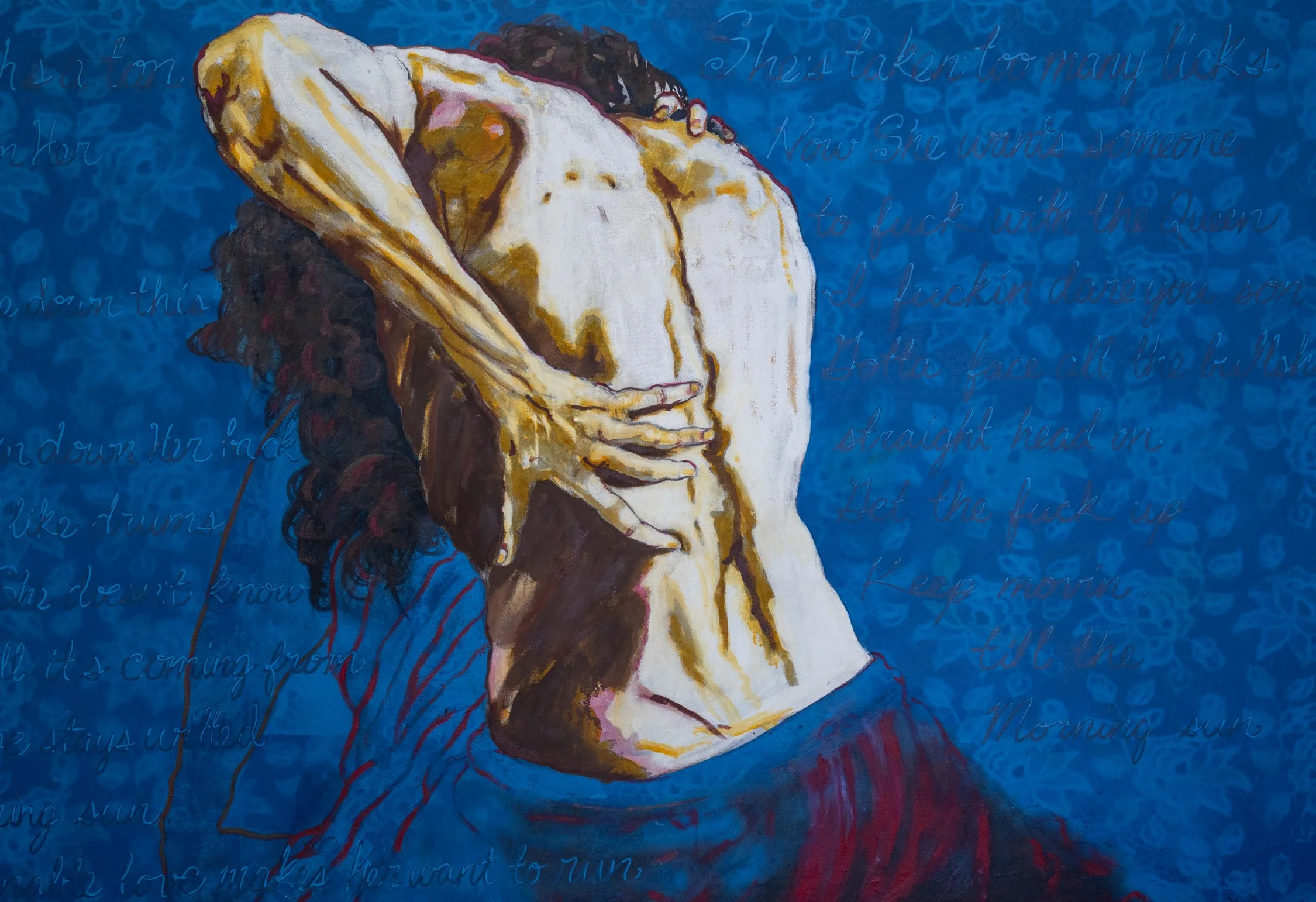
I never really conformed to what society expected. As a result, I struggled to feel accepted in certain circles just for wanting to be myself. Making art helped me through that.
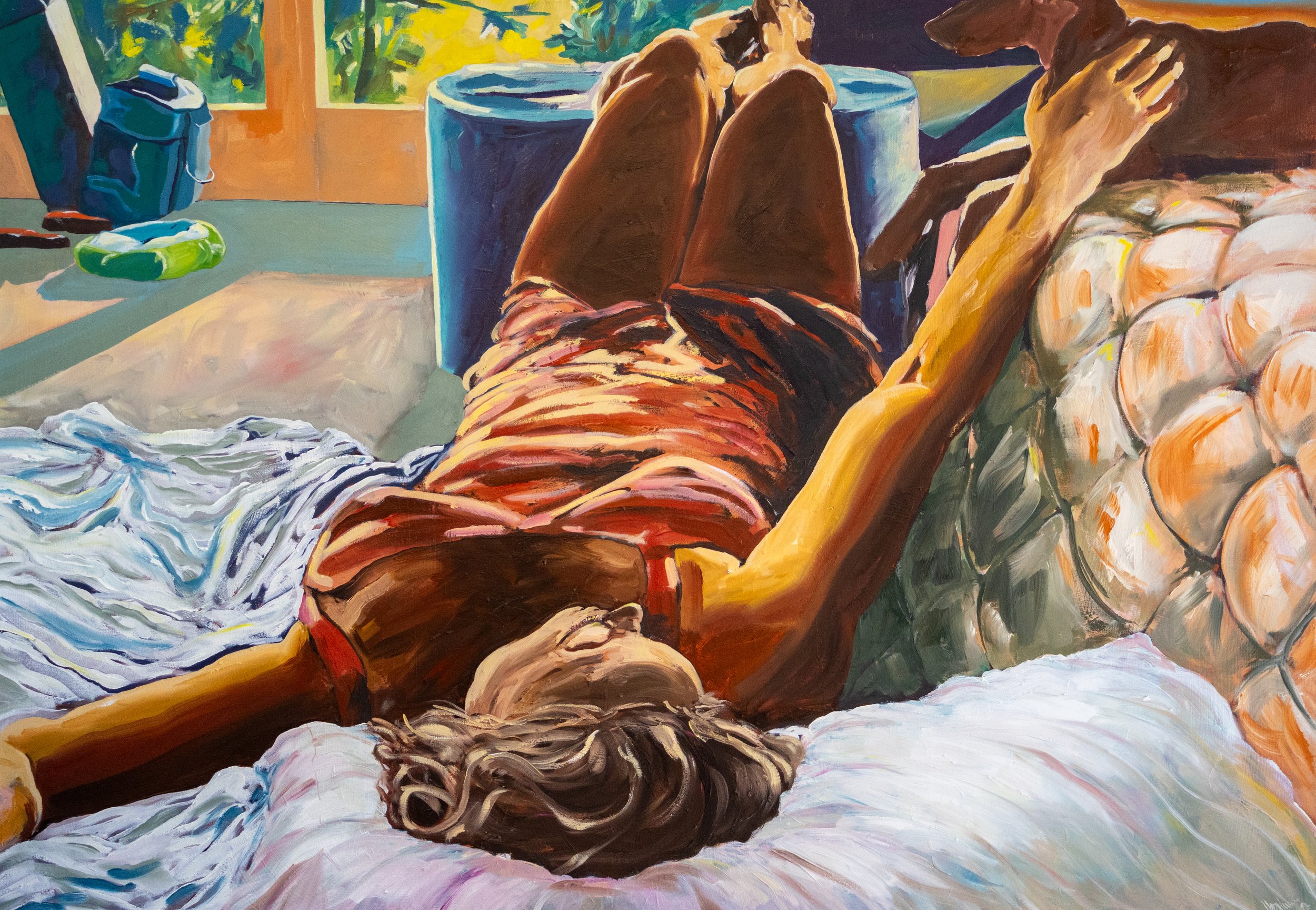
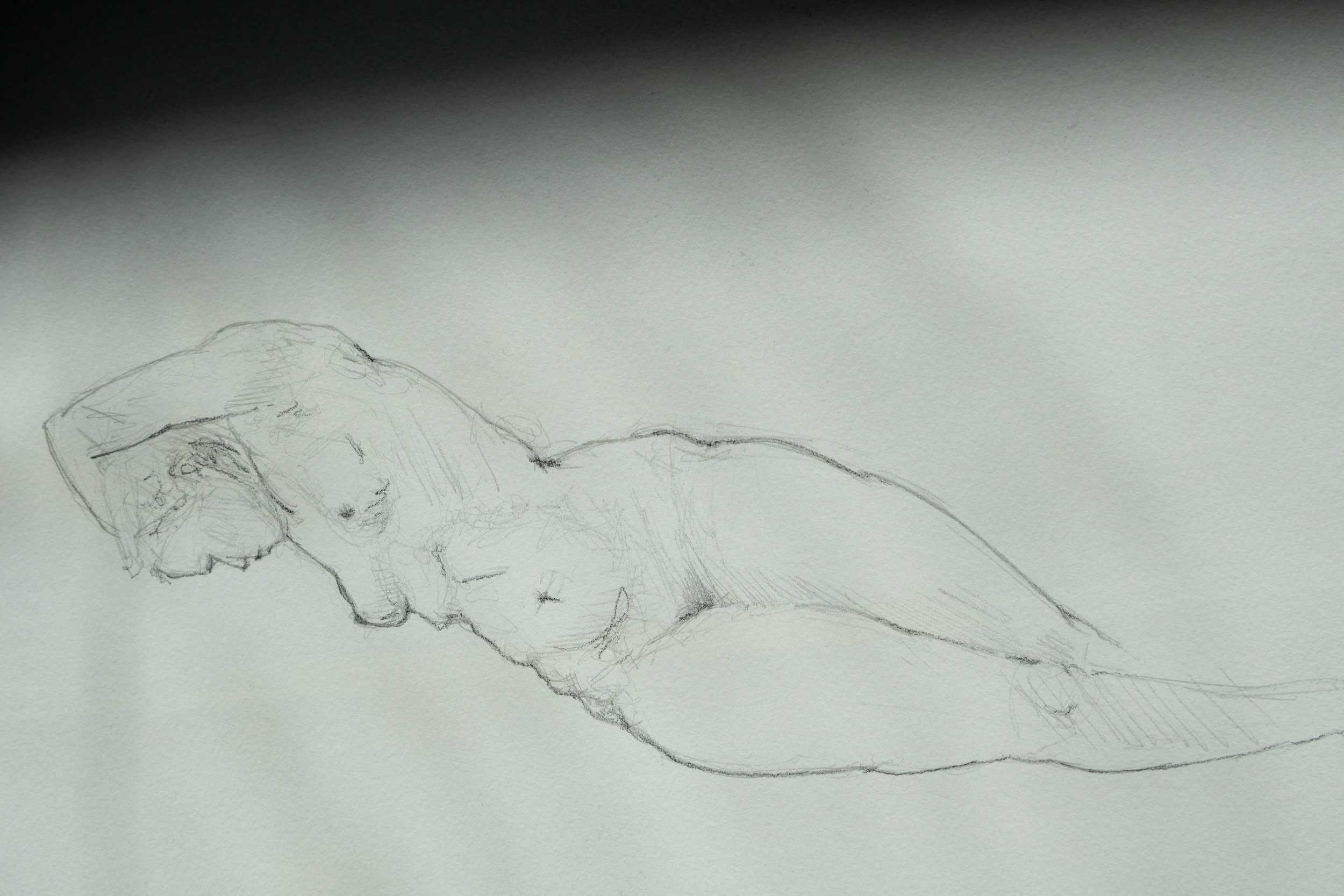
I’ve always been drawn to drawings and paintings that feel energized, like they’re moving even when they’re still.